Become a HAM
What is amateur radio?
Amateur radio operators can be found in almost every country and in all walks of life. They represent a colorful array of backgrounds and professions. They have one thing in common: their passion for technology and radio. Both 'ordinary people' and the late King Hussein of Jordan, his colleagues King Juan Carlos of Spain and King Bhumiphol of Thailand were amateur radio operators. Former Prime Minister Rajiv Gandhi of India and Carlos Menem, former President of Argentina, were also among them.
But there is also a place for you. You too can become an amateur radio operator! You will then be welcomed into this circle of friends of more than one million licensees worldwide.
From the origins of radio, amateur radio operators were 'researchers'. They accomplished pioneering work in radio communication. The technology was then quite elementary but nevertheless! An amateur radio operator was above all a physicist AND a technician. He not only built his own equipment, but also manufactured the components necessary for it.
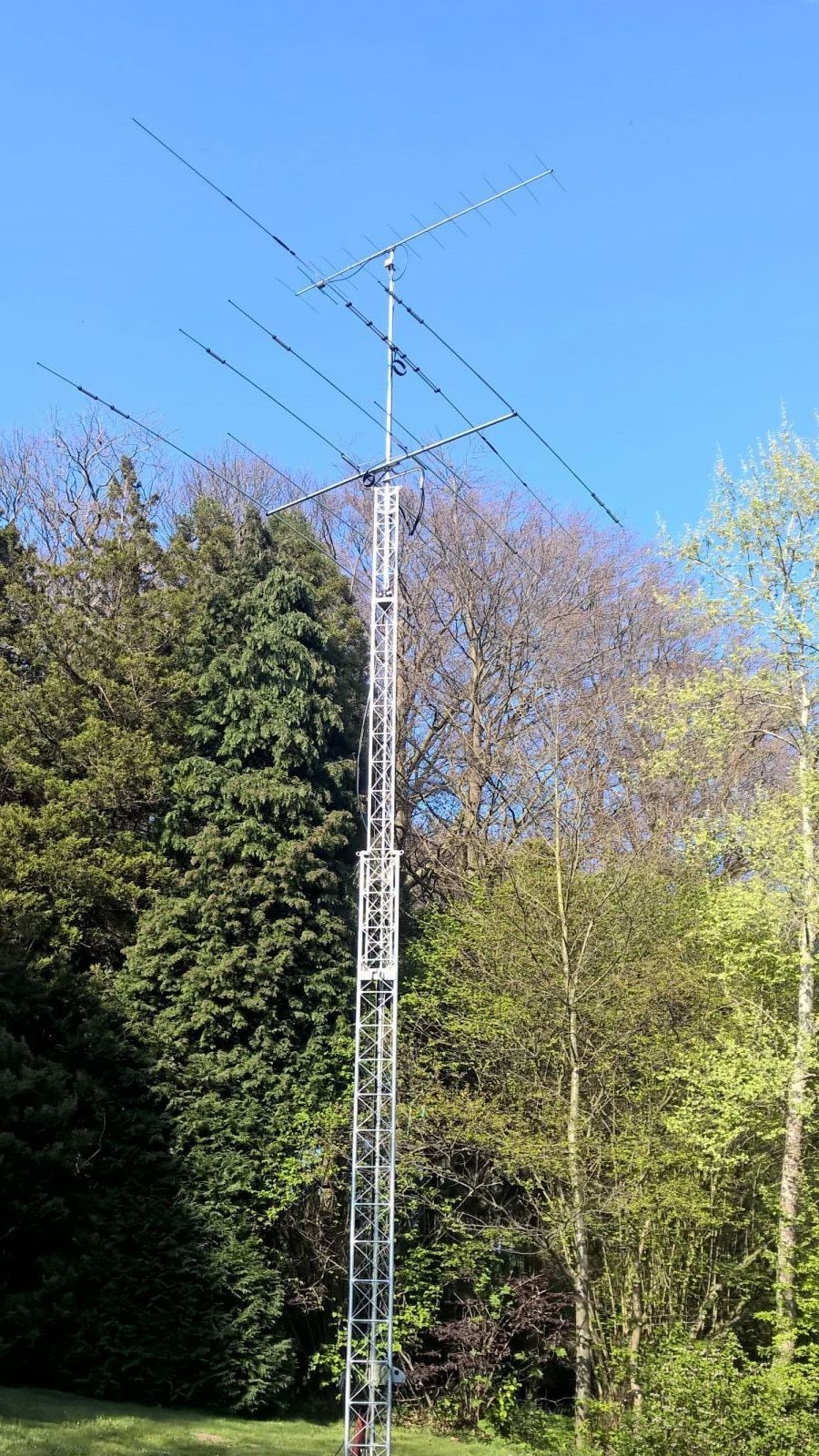
Three quarters of a century later, electronics has evolved greatly. The integration of electronic components has made its entry everywhere. It is currently practically impossible to build transmission and reception equipment yourself that can compete in performance with ready-to-use commercial examples. Fortunately, this does not apply to all equipment. The amateur radio operator can generally build his antennas himself instead of buying beautiful compromise solutions in the store.
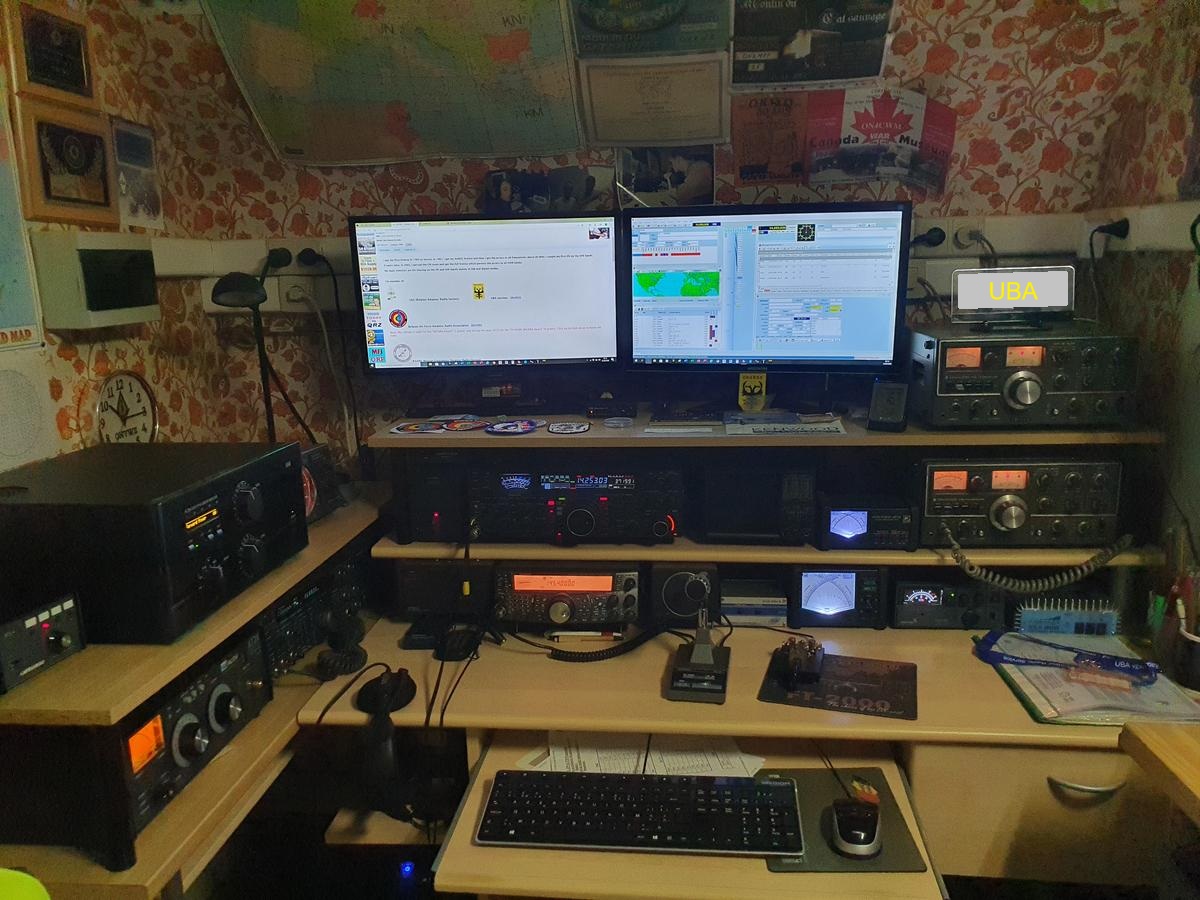
The amateur radio operator is the one who still regularly dares to build something himself. But also the one who knows his commercial transmitter and/or receiver perfectly, and can repair this device himself in case of possible defect.
Worldwide recognition: amateur radio operators have a hobby that enjoys considerable recognition worldwide due to its potential for effective service. The International Telecommunication Union (ITU) which is a subdivision of the United Nations (UN) and also the supreme world body that coordinates and regulates all aspects of telecommunications, recognized this aspect of amateur radio service in its resolution No. 640 during its 1979 world conference.
Amateur radio transmission is the unique medium for regularly establishing direct personal contacts at the international level. Today, more than ever, peoples have an urgent need for mutual appreciation and understanding. Amateur radio knows no geographical, political, ethnic, religious or economic boundaries. As a training medium for youth, amateur radio plays an exceptional role.
Amateur radio and CB
There is no connection between amateur radio service and CB (Citizen Band). Yet, among the general public, the two hobbies are almost always confused. Amateur radio is primarily a technical hobby. It enjoys worldwide recognition as a service. The amateur radio operator is supposed to have sufficient technical knowledge to be able to build a transmitter or receiver himself. CB is purely a communication hobby without technical requirements.
The UBA
 The UBA
The UBA (Royal Union of Belgian Amateurs - www.uba.be) is an association of people with a common point of interest: they are all interested in radio communication technology. The statutes clearly establish that amateur radio is a technical hobby and not a communication hobby like CB (Citizen Band).
The UBA represents amateur radio operators with all national and regional authorities (ministries, BIPT, etc...) and defends their interests there, primarily proactively. It also represents Belgian amateur radio operators through its links with the IARU (International Amateur Radio Union) at the highest decision-making levels worldwide (ITU, UN).
The UBA helps and supports its members in all aspects of practicing the hobby (providing information, QSL card service, organizing activities, insurance, legal assistance, etc...) and helps candidate amateur radio operators prepare for the BIPT exam.
B-EARS
 B-EARS
Belgium Emergency Amateur Radio Service is part of the UBA and has more than 300 members throughout Belgium who want to serve their fellow citizens with their passion and knowledge of radio.
The predecessor of B-EARS, the 'Emergency Radio Network', had been operational since 1962 at the request of the Red Cross. It became B-EARS in 2009 and expanded thanks to new possibilities offered by legislation for amateur radio operators.
This also immediately explains the objective of B-EARS: to provide basic radio communication service and exclusively at the request of provincial governors when all traditional communication links (telephone, mobile phone, Astrid, internet, etc.) no longer function.
There are different procedures for establishing communication and operation with our equipment and knowledge. This is why B-EARS members must follow training that can in many cases also be followed online, interactively and at your own pace. In addition, we regularly organize exercises at provincial or national level.
Amateur radio operators often provide the first vital communications to and from disaster areas during natural disasters abroad, thus saving human lives.
Becoming an amateur radio operator
As an amateur radio operator, you get many possibilities to transmit and build or modify transmission equipment yourself. To be able to do this safely and responsibly, you must have the necessary technical and operational knowledge and also know the applicable legislation.
This is why the BIPT organizes amateur radio exams to check if you have the required knowledge. Only after passing do you get an operator certificate that allows you to make transmissions yourself.
The amount and degree of difficulty of the material depends on the class of operator certificate you are aiming for:
Class C operator certificate
The material for obtaining the class C operator certificate is rather limited and includes, in addition to elementary technical knowledge, mainly procedures and legislation.
Class B operator certificate
To obtain the class B operator certificate, more technical knowledge is required and the procedures are also deepened.
Class A operator certificate
The material for the class A operator certificate is much more extensive technically. For the procedures and legislation part, the material is practically identical to that of the class B exam.
For more information:
or contact ON4RSX. From time to time or on request, we organize courses for obtaining various licenses.